Disability Inclusion in Action at Inglewood Athletics Club
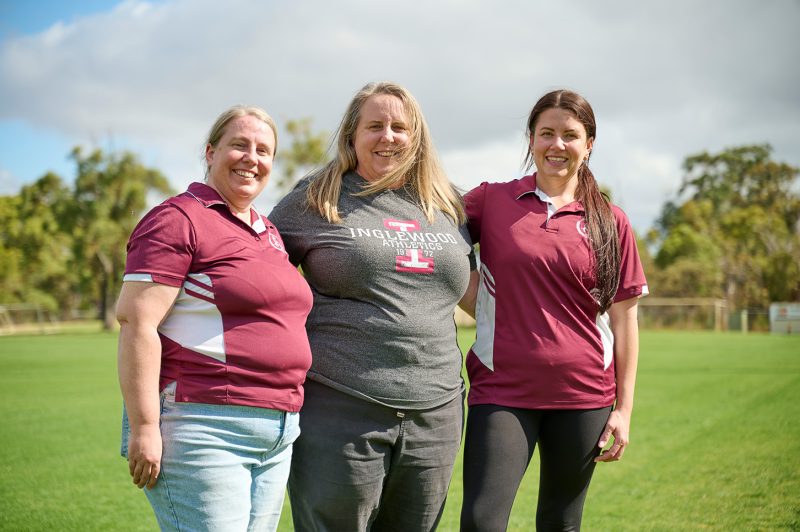
Recently, we met up with Club President Steph, Inclusion Officer Rachel and Volunteer Coordinator Amy, from Inglewood Athletics Club. Together, they form part of the core team running the club, supported by a dedicated group of volunteers.
Founded in 1972, Inglewood Athletics Club has seen generations of happy athletes pass through its gates.
“Inclusion has always – in some capacity – been part of the club’s DNA,” Steph begins, “even before I came into the role as Club President.”
“We’ve had plenty of athletes of all abilities come through the club, and we’ve always tried to ensure that every one of them has a meaningful way to participate in our programs.”
Inclusion starts with leadership
Inglewood Athletics Club puts a strong focus on creating an inclusive and welcoming space. According to Steph, every coach, volunteer, committee member, and athlete contributes to making the club more inclusive.
“All members of the club and the committee have different backgrounds and experiences that we bring to our roles,” Steph explains.
“I believe it’s a combination of our different skills, paired with the collective mission of creating a really great club, that makes the inclusive culture ‘stick’ and sets the tone for who we are as a club.”
However, Steph also is a firm believer in the importance of leadership.
“You can’t underestimate that leadership is key in driving inclusion,” Steph continues, “Not only do we have a big responsibility in making sure it trickles down to every club level but also that we’re open to listening to feedback from our members.”
Listening to the voices of people with lived experience
Although disability inclusion has long been a focus for the club, welcoming Rachel onto the committee as Inclusion Officer has been incredibly valuable.
“Rachel has been great in making sure we constantly adopt an inclusive lens to what we do,” says Steph.
“From researching and introducing new initiatives to liaising with coaches and working with parents of children with disability, her role has been invaluable.”
Rachel, a mother of two children with disability who regularly participate in the club’s programs, brings both professional insight and lived experience to her role.
“I decided I wanted to join the committee as a way of giving back,” Rachel says.
“We first came here for an open day, and I had my daughter, who has disability, with me. She absolutely loved it.”
“From the start, the club was amazing in making sure my daughter felt included, was able to participate and felt valued.”
“I’ve seen my daughter develop new skills and grow confidence. She’s very engaged and enthusiastic – and as a parent, that has been wonderful to see.”
Making inclusion practical
According to Rachel, adaptability and listening are essential to meaningful inclusion.
“We always try to be as flexible as possible and work closely with parents to understand their child and how we can best accommodate them.”
“We’re also not very regimented in the way we judge events or activities, and we’re open to modifying rules so athletes can participate and progress at their own pace.”
One example of this flexibility is how the club approaches races.
“Some athletes can’t run a full 1,500‑metre or 800‑metre race,” Steph explains.
“They still start on the line with their teammates, but only need to run the distance they can.”
“The kids get so excited, especially if they’ve run 50 metres more than they’ve been able to before,” she concludes.
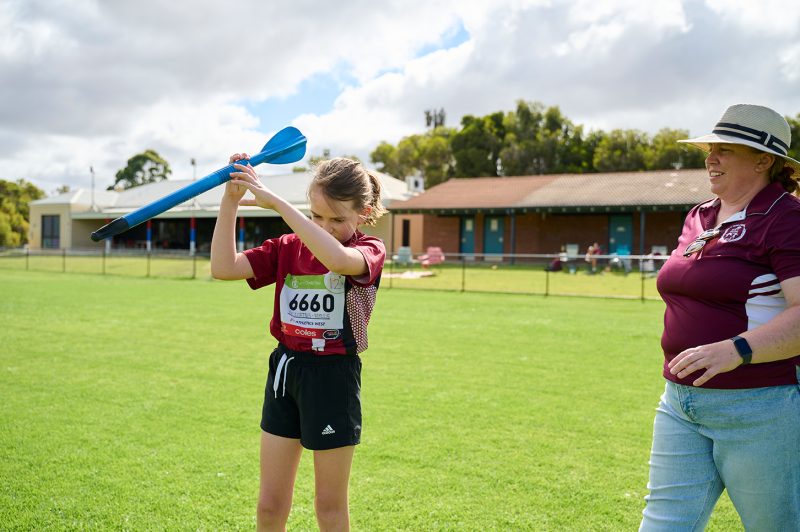
The club also adapts equipment where needed. Hurdle heights may be lowered, and some athletes use smaller, lightweight plastic javelins instead of standard equipment.
At other times, inclusion is about understanding sensory overwhelm.
“For some neurodivergent athletes, the noise from a starting gun can be frightening,” Rachel explains.
In these cases, children may be positioned further away, and the gun’s volume is reduced.
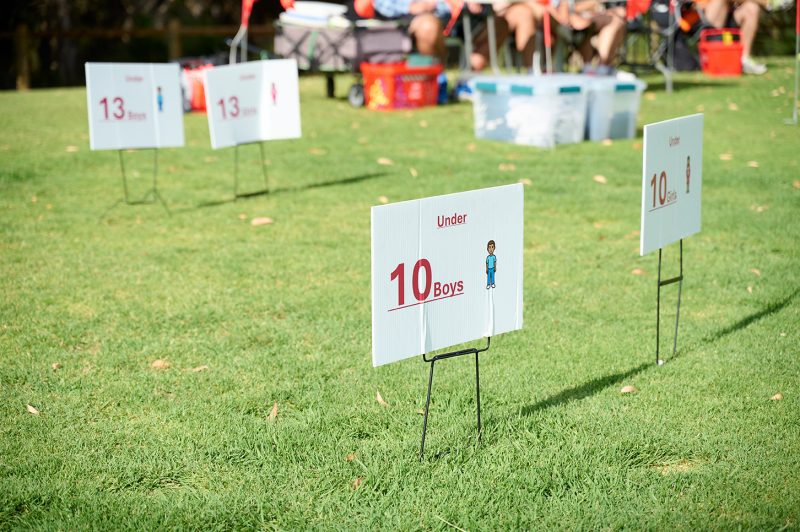
One of the simplest and most effective changes has been introducing clear, printed signage at marshalling. Initially trialed as laminated signs, the visuals show age groups and locations clearly, helping reduce uncertainty, stress, and confusion.
“These small, inexpensive, and simple accommodations ensure that all athletes can get out on the field, compete alongside everyone else, and have a good time”.
How inclusion benefits everyone
For Inglewood Athletics Club, many inclusion initiatives have benefits far beyond athletes with disability. This well-known concept is called the curb‑cut effect and explains how disability specific changes end up benefitting the wider community.
“The new signs have made marshalling more efficient and far less stressful,” Volunteer Coordinator Amy explains.
“Parents, chaperones and new members have all left positive feedback.”
The signage has improved flow, organisation and calmness across competition days. Volunteers, families and visiting athletes all benefit from clearer direction and reduced congestion.
Inclusion has also contributed to strong member retention and a positive reputation in the local community.
“Many members return season after season and bring friends and family with them”.
“That makes us extremely proud of the effort we put in.” Amy says.
The role of State Sporting Associations
Support from the State Sporting Association (SSA) has also been an important part of the club’s inclusion journey. While inclusive practices are embedded day to day, knowing expert guidance is available provides reassurance for both volunteers and committee members.
“If there are things we don’t know how to address, the SSA has inclusion officers we can liaise with,” Amy explains.
“They’re approachable and always willing to help.”
This support helps the club navigate more complex situations and continue learning as needs evolve.
Knowing they don’t have to figure everything out alone strengthens the club’s ability to listen, adapt and keep improving – supporting better outcomes for athletes, families, and volunteers alike.
It’s here! The new WIN website
Specifically designed for sports clubs, find resources, tips and tools to transform your club into a welcoming and inclusive space for all.
Take me there!